Memory vs Legacy
Scott Duncan
Just today, an old roommate reached out. He found my email, sent me a note. I hadn't heard from him in decades. I was delighted. Memories came rushing back as I wrote an enthusiastic response: his love of indie rock bands, a concert we went to together, our crummy landlord. Vivid, specific — and completely disconnected from anything before or after. A series of snapshots attached to a feeling. Enough to help me write an enthusiastic response but not enough to tell a complete story.
You may have had the experience of not being sure whether you remember an event from childhood, or whether you remember the photograph. The memory filled in around the image — disconnected from other moments, but connected to feeling. The photograph stood in for a memory that was lost. It was the record that memory couldn't be.
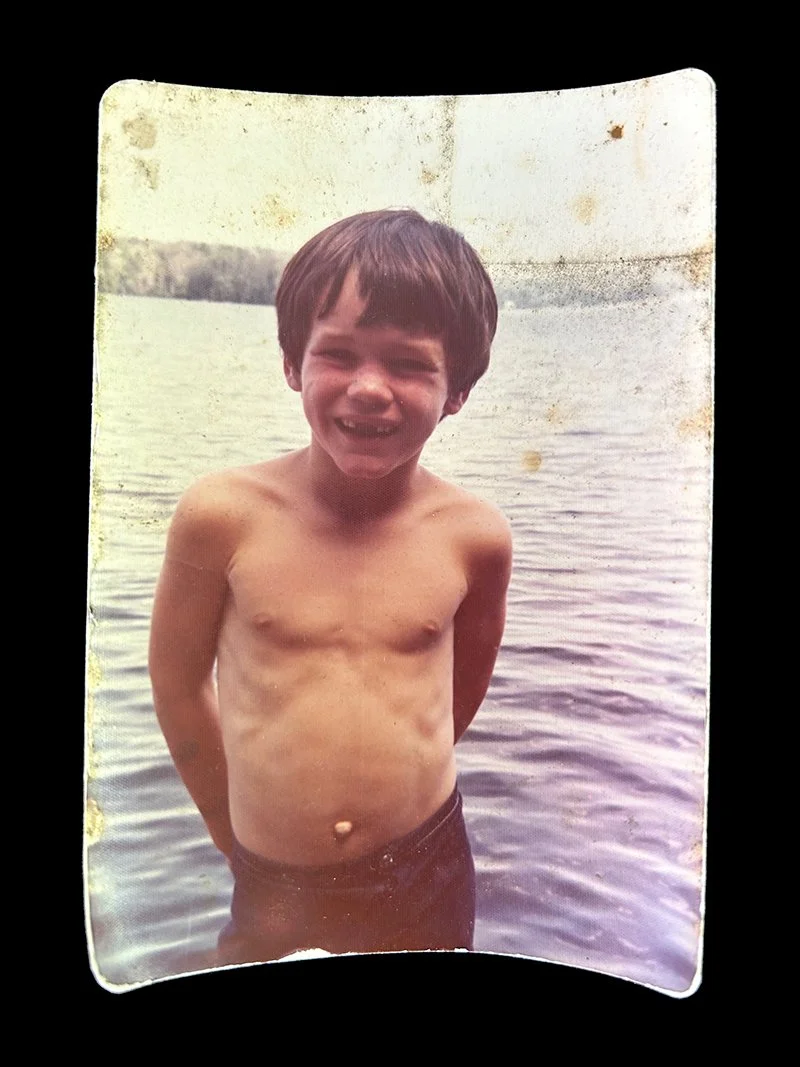
Scott as a young boy at the lake
Memory works like this: It keeps feelings and releases details. Think of it as a filing cabinet where only a few cards remain, filed under something like "what it felt like in second year university” or "the summer everything changed."
A record works differently. It doesn't carry feeling on its own. A photograph, a letter, a document, a book: these exist outside of any single memory. They're available to anyone, including people who weren't there, including people not yet born.
This matters for a lot for legacy. Completeness — an honest, full account of what actually happened and what it was like— becomes nearly impossible without record and feeling being connected.
And when you're talking about a family or an organization, you're working with a collection of individuals, each carrying their own incomplete version. There might be significant events that nobody remembers the same way, or at all.
A book is a parallel record: fixed, resistant to the subjective editing that memory does automatically. It maintains what memory lets go.
